Powerful Chief AI Officer Statistics: 7 Proven Ways to Turn Prompts into an Executive Playbook
Why the right AI statistics matter for executives
Across midsize and large companies, AI adoption headlines sound impressive, but the underlying Chief AI Officer statistics tell a different story. Many organizations run numerous pilots and experiments, yet only a fraction successfully scale AI beyond a handful of isolated use cases, often because no single executive owns the operating model, governance, and measurement.
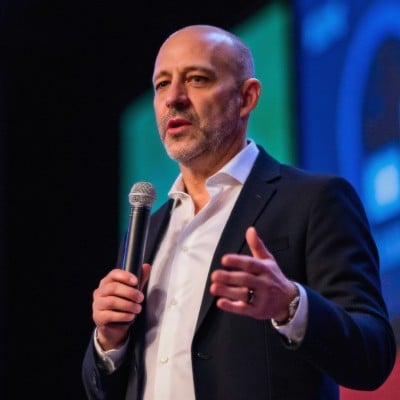
In a recent Software Oasis session, AI strategist Chris Daigle walked mid‑market leaders through how to turn ad hoc prompting into a practical Chief AI Officer playbook. Instead of adding more tools, his approach focuses on SG&A workflows, clear guardrails, and tracking the right statistics so executives can see exactly where AI is creating leverage and where it is just creating noise. For a narrative version of that approach, see the related Software Oasis Experts article, How Chris Daigle Turns Generative AI into a Chief AI Officer Playbook.
Executives resonate with clear, concrete numbers, so Daigle encourages teams to treat AI like any other operating initiative: define the baseline, run small but meaningful experiments, and review the statistics every month in the same way you review revenue, pipeline, or utilization. When leaders can see precisely how many hours were saved, how many touchpoints were automated, or how much faster certain reports ship each week, it becomes far easier to justify further AI investment and to shut down experiments that are not delivering material gains.
From “everyone uses AI” to measurable workflow gains
Daigle draws a sharp line between saying “everyone on our team uses AI” and having even a few workflows with documented steps, inputs, outputs, and owners. He encourages leadership teams to stop obsessing over generic adoption metrics and start tracking specific, operational statistics: the percentage of SG&A processes with a defined AI‑assisted path, the hours those workflows actually save each month, and how many pilots become standard operating procedures within a quarter.
In the session, he showed how mapping a single end‑to‑end process—such as weekly revenue summaries, KPI packs, or customer‑conversation recaps—and then assigning pieces of that process to people, systems, or models quickly exposes where AI can remove drudgery. When that map includes time‑to‑complete and error‑rate baselines, executives can see in black‑and‑white how a new generative AI flow changes the numbers instead of relying on anecdotes.
He also has teams explicitly log “before and after” snapshots for each redesigned workflow: average time spent per cycle, number of manual handoffs, and frequency of errors or rework. Over a few cycles, those simple statistics become a compelling story—helping leaders decide which AI‑enabled workflows should be rolled out across more teams and which experiments should be redesigned or retired.
Why your AI plan is still just prompts
One of Daigle’s strongest points is that most AI plans are really just lists of prompts. Marketing, sales, and finance each have their favorite tools and techniques, but nobody is responsible for stitching them together into a consistent, governed system. He refers to this as “shadow AI”: important work happening out of view, with uneven quality and no institutional learning built in.
To counter this, he has executives start with their “critical but soul‑sucking” SG&A processes and run them through a simple, repeatable exercise. First, identify the business outcome the process supports. Second, break the process into distinct steps and label each step as best handled by humans, systems, or AI. Third, define what success looks like in measurable terms—cycle time, error rate, or time from raw data to executive‑ready insight. Only then do teams craft prompts and tools around those steps, so every AI use is anchored to an outcome and a metric.
A key nuance from Daigle’s approach is that he treats prompts as assets, not one‑off tricks. Teams are asked to store their best prompts, instructions, and guardrails in a shared “playbook” so future hires and adjacent departments can reuse what works instead of reinventing everything from scratch. Over time, this playbook becomes a living internal knowledge base—one that captures not just successful outputs, but the exact patterns that produced those wins.
Unique elements of Daigle’s Chief AI Officer playbook
Daigle’s playbook is distinctive in the way it treats non‑technical leaders as the primary drivers of AI success. Rather than teaching executives to be prompt engineers, he teaches them to be workflow designers and decision‑makers who ask, “Where does AI sit in this process, and how will we know it is working?” He often begins working sessions by having leadership list processes where highly paid people spend time summarizing, reformatting, or chasing information—tasks that are prime candidates for generative AI to handle.
Another unique detail is his insistence on explicit escalation paths inside every AI‑assisted workflow. If a model’s draft, classification, or recommendation fails a simple confidence or quality check, it should automatically flow back into a human review lane with clear expectations and turnaround times. This design turns generative AI from a risky black box into a transparent collaborator and gives executives the confidence to use AI in workflows that touch customers, finance, or board‑level reporting.
He also encourages leaders to appoint “workflow owners” instead of “AI owners.” These owners are responsible for making sure a process continues to produce accurate, timely, and compliant outputs as models evolve, tools change, or regulations tighten. That subtle shift helps organizations avoid tool‑of‑the‑month chaos and stay focused on outcomes: faster cycles, fewer errors, and more strategic time for their teams.
What broader statistics say about the Chief AI Officer role
The pressures Daigle addresses in mid‑market firms mirror what larger surveys are seeing globally. One widely cited enterprise study of IT decision makers at midsize to large companies found that roughly one in ten organizations had already hired a Chief AI Officer and about one in five were actively recruiting for the role, putting roughly a third of respondents in the category of either operating with a CAIO in place or working to stand one up. Those numbers underscore how quickly AI leadership is moving from experimental to structural as organizations try to coordinate strategy, governance, and investment across multiple business units, rather than leaving AI scattered in isolated projects.
Analyses from business and technology schools echo the same theme: without centralized AI leadership, companies struggle with fragmented initiatives, duplicated tools, and unclear accountability. Articles such as Do You Really Need a Chief AI Officer? and enterprise‑focused explainers like Do You Really Need a Chief AI Officer? Why Enterprises Are Adopting the Role highlight how a CAIO can align AI projects with strategy, set guardrails for responsible use, and translate technical potential into measurable business outcomes.
Changing your own Chief AI Officer statistics
For executives who feel their AI story is a collection of clever demos and scattered pilots, Daigle’s playbook offers a practical starting point. Pick a single SG&A process that matters to the business, map it end‑to‑end, assign roles for people, systems, and AI, and define a few simple statistics you will monitor as you introduce generative models into the flow. That one documented workflow becomes page one of your own Chief AI Officer handbook.
As you repeat that exercise across additional processes, your organization’s AI metrics start to shift: more of your SG&A work runs through governed, AI‑assisted workflows; more pilots mature into standard practice; and more executive decisions are backed by faster, cleaner inputs. Instead of chasing the latest tool or headline, you steadily improve the statistics that actually matter—how often AI helps your teams do better work, in less time, on the processes that drive your business forward.
Together, Daigle’s hands‑on playbook, the Software Oasis case material, and emerging enterprise research all point in the same direction: treating AI as a governed part of your operating model, with clear ownership and measurable statistics, is what separates a few clever prompts from a true Chief AI Officer strategy.